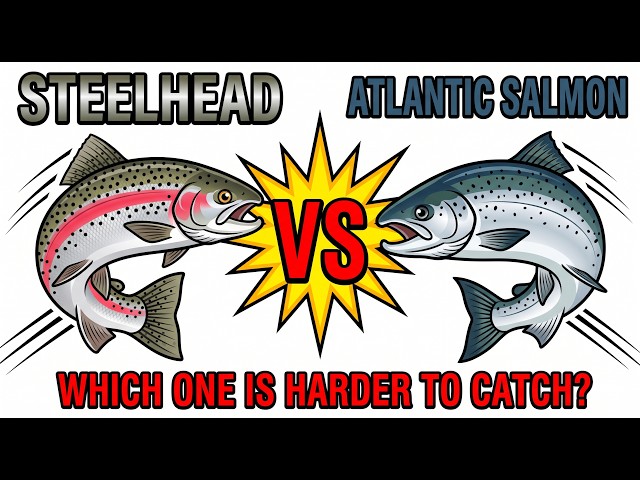
Most people know that Pacific salmon die after spawning. Most people assume all salmon do. The Atlantic salmon doesn't. Neither does the steelhead. They're the two fish that survive.
The Atlantic salmon (Salmo salar) is genetically closer to the brown trout than to any Pacific salmon. It shares genus Salmo with the brown trout — not genus Oncorhynchus with the steelhead
The Jock Scott, the Durham Ranger, the Silver Doctor — fly patterns developed on Scottish and Norwegian rivers in the 19th century. The Atlantic salmon angling tradition is 500 years older than North American fly fishing
Sea louse on an Atlantic salmon = entered the river within the last 24-48 hours. That fish is the most catchable one in the pool. The lice die in freshwater — their presence is a timestamp
Steelhead mending: almost always upstream to slow the fly. Atlantic salmon: often downstream to accelerate the swing. The first thing an experienced steelhead angler gets wrong on an Atlantic salmon river
The springer Atlantic salmon that entered the river in spring and is holding through summer has been evaluating and refusing presentations for four months before autumn spawning. The steelhead that entered yesterday hasn't refused anything yet
Atlantic salmon post-smolt ocean survival rates have declined dramatically since the 1980s. The specific mechanisms — changes in the North Atlantic ecosystem — are beyond the reach of any river-based management program
The Miramichi River in New Brunswick: one of the last productive wild Atlantic salmon fisheries accessible to the visiting angler in the Western Hemisphere
00:00 Introduction
00:47 The Identity
03:56 The Life Cycle
06:52 The Range
09:30 The Technique
11:30 The Difficulty
14:20 The Future
Subscribe to Fishing Lab and drop a Like.
#SteelheadVsAtlanticSalmon #Steelhead #AtlanticSalmon #FishingLab #FlyFishingSteelhead #AtlanticSalmonFishing #SteelheadFishing #SpeyFishing #FlyFishing #WhichOneIsHarder
The Atlantic salmon (Salmo salar) is genetically closer to the brown trout than to any Pacific salmon. It shares genus Salmo with the brown trout — not genus Oncorhynchus with the steelhead
The Jock Scott, the Durham Ranger, the Silver Doctor — fly patterns developed on Scottish and Norwegian rivers in the 19th century. The Atlantic salmon angling tradition is 500 years older than North American fly fishing
Sea louse on an Atlantic salmon = entered the river within the last 24-48 hours. That fish is the most catchable one in the pool. The lice die in freshwater — their presence is a timestamp
Steelhead mending: almost always upstream to slow the fly. Atlantic salmon: often downstream to accelerate the swing. The first thing an experienced steelhead angler gets wrong on an Atlantic salmon river
The springer Atlantic salmon that entered the river in spring and is holding through summer has been evaluating and refusing presentations for four months before autumn spawning. The steelhead that entered yesterday hasn't refused anything yet
Atlantic salmon post-smolt ocean survival rates have declined dramatically since the 1980s. The specific mechanisms — changes in the North Atlantic ecosystem — are beyond the reach of any river-based management program
The Miramichi River in New Brunswick: one of the last productive wild Atlantic salmon fisheries accessible to the visiting angler in the Western Hemisphere
00:00 Introduction
00:47 The Identity
03:56 The Life Cycle
06:52 The Range
09:30 The Technique
11:30 The Difficulty
14:20 The Future
Subscribe to Fishing Lab and drop a Like.
#SteelheadVsAtlanticSalmon #Steelhead #AtlanticSalmon #FishingLab #FlyFishingSteelhead #AtlanticSalmonFishing #SteelheadFishing #SpeyFishing #FlyFishing #WhichOneIsHarder
Post your comment
Up Next
Autoplay
-
08:02

Why Does Canal Pike Fishing Feel So Much Harder Lately?
-
Atlantic Salmon On The Fly!! RARE Catch While Streamer Fishing!
-
08:40
Extreme Atlantic Salmon Shore Fishing! MICHIGAN Float Fishing for January Salmon + Steelhead! BOBBER
-
Crab POTS vs. Crab RINGS|Which One PERFORMS Better? Crabbing Netarts Bay on the LAST Day of DECEMBER
-
10:06
Vertical Jigging Ice Fishing For Atlantic Salmon + Coho Salmon + Steelhead ! Lake Huron Michigan!
-
Brown trout adventure in upstate New York, surprise atlantic salmon catch during steelhead season!
-
Atlantic Salmon and Steelhead Fishing Ontario | March 2023 #salmon #fishing #river
-
12:47
Pier Salmon Fishing In Michigan New Platte Magic Arctic Spinner! Atlantic Salmon + Coho + Steelhead
-
Is A Golf Course Harder Or Easier From The Forward Tees? (Busta From BustaJack Golf)
-
11:50
Tackle Shop STEREOTYPES | Which one are you?? ????
-
Fly Fishing In The Black Hills
-
Roving the River for Specimen Pike
-
HATCH - BIG SKY PMDs - Montana Fly Fishing By Todd Moen
-
Fly Fishing In Some Of The Best Trout Fishing Water I Have Ever Seen!